Kenya Imports Fuel Through a Government-to-Government deal
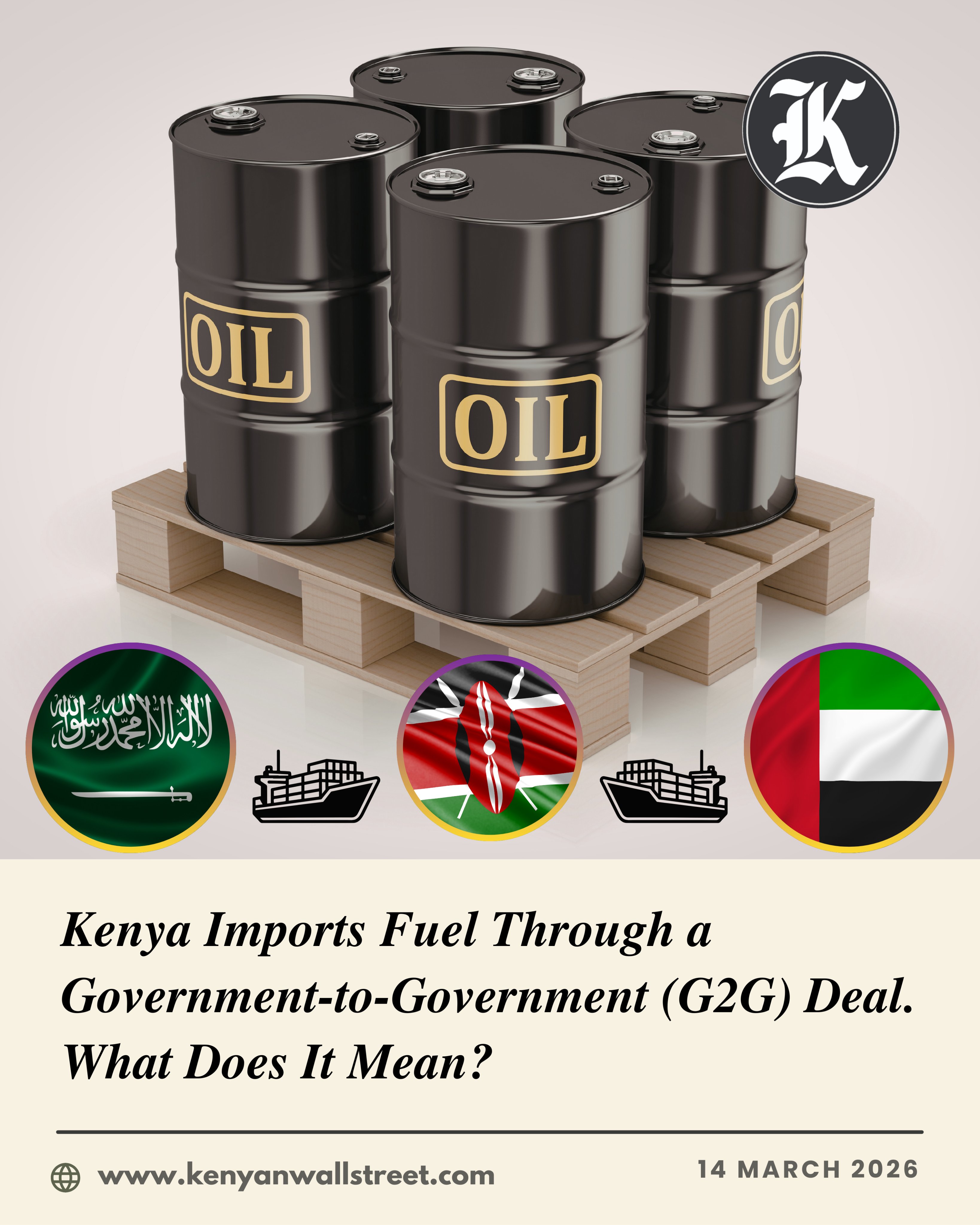
𝐊𝐞𝐧𝐲𝐚 𝐈𝐦𝐩𝐨𝐫𝐭𝐬 𝐅𝐮𝐞𝐥 𝐓𝐡𝐫𝐨𝐮𝐠𝐡 𝐚 𝐆𝐨𝐯𝐞𝐫𝐧𝐦𝐞𝐧𝐭-𝐭𝐨-𝐆𝐨𝐯𝐞𝐫𝐧𝐦𝐞𝐧𝐭 (𝐆𝟐𝐆) 𝐃𝐞𝐚𝐥. 𝐖𝐡𝐚𝐭 𝐃𝐨𝐞𝐬 𝐈𝐭 𝐌𝐞𝐚𝐧? 🇰🇪🇸🇦🇦🇪
Kenya introduced a Government-to-Government (G2G) oil import arrangement in March 2023 after a dollar shortage disrupted fuel imports.
The system replaced the Open Tender System (OTS) and allows Kenya to import refined fuels such as petrol, diesel, jet fuel, and kerosene on up to 180-day supplier credit.
Suppliers include 🇸🇦 Saudi Aramco and 🇦🇪 Abu Dhabi National Oil Company (ADNOC) and Emirates National Oil Company (ENOC).
The initial agreement ran six months to September 2023 and has since been extended. The structure allows fuel to be sold locally before payment, easing immediate demand for dollars.
-Kenyan Wall Street
Kenya introduced a Government-to-Government (G2G) oil import arrangement in March 2023 after a dollar shortage disrupted fuel imports.
The system replaced the Open Tender System (OTS) and allows Kenya to import refined fuels such as petrol, diesel, jet fuel, and kerosene on up to 180-day supplier credit.
Suppliers include 🇸🇦 Saudi Aramco and 🇦🇪 Abu Dhabi National Oil Company (ADNOC) and Emirates National Oil Company (ENOC).
The initial agreement ran six months to September 2023 and has since been extended. The structure allows fuel to be sold locally before payment, easing immediate demand for dollars.
-Kenyan Wall Street