South African fintech Lula, formerly Lulalend, has secured a R340 million (about $21 million) injection from Dutch development bank FMO, a move that strengthens its ability to lend to small and micro businesses across the country.
The funds are denominated in rand, a deliberate structuring choice that removes the exchange rate exposure that often undermines local lending books when capital is borrowed in hard currency.
Lula’s trajectory has shifted from a specialist lender into a broader financial platform. Since its 2014 founding, the company refined an automated lending model that uses alternative data and machine learning to underwrite small business loans quickly.
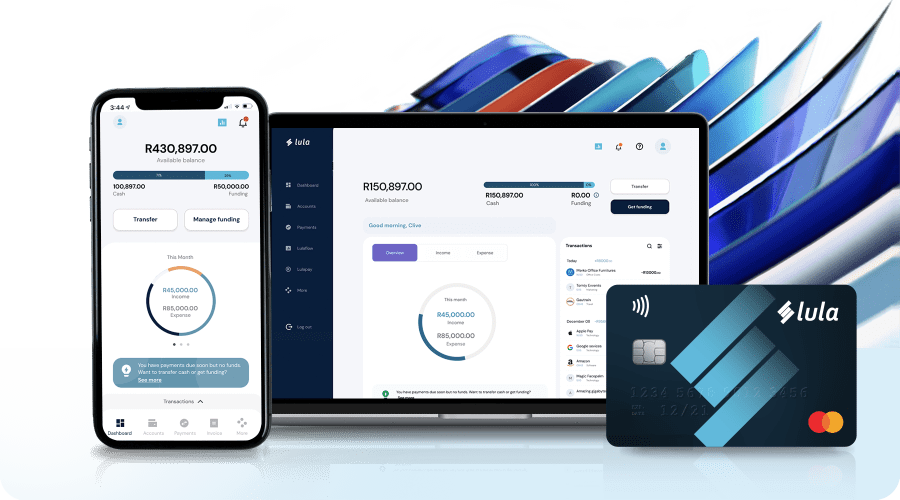
More recently the business introduced a neobanking product in partnership with Access Bank, combining business accounts, cash flow tools and instant credit into a single offering aimed at small and medium enterprises.
Receiving ZAR-denominated debt gives Lula a structural edge. Many African fintechs borrow in dollars or euros and then extend credit in local money, a mismatch that becomes costly if the local currency weakens.
With local-currency funding Lula can price loans predictably and avoid passing hedging costs onto borrowers, an important consideration for micro firms sensitive to interest-rate swings.
Lula’s move is not purely about currency. The company is leaning into a lending-as-a-service model while deepening banking features, because controlling the business account produces much richer signals about cash flow than intermittent loan applications do.
Having transactional data flowing through its own rails should improve credit decisioning and allow Lula to detect early signs of distress or growth, which is one reason institutional lenders have been willing to back the company.
There are several operational tests ahead. As Lula pushes further into the informal and micro segments, loan performance will become harder to predict. Cash flows at that level can fluctuate rapidly, and small shocks can blow out repayment rates.
Keeping default rates low will depend on disciplined underwriting, active portfolio management, and collections practices that respect local contexts. Lula’s existing investor base, which includes Quona Capital, DEG and Triodos, suggests confidence in its credit playbook, but scaling while preserving underwriting quality is the hard work.
Market competition also matters. South Africa’s largest banks are digitalising parts of their offerings, and new challenger banks and fintechs are vying for SME customers.
Lula’s advantage lies in its speed and the data it collects through its neobank features, but incumbents retain scale, regulatory relationships and customer trust.
Successful differentiation will require tight product integration, clear cost of credit benefits for SMEs, and seamless cash management tools that demonstrably improve day-to-day operations for business owners.From a sector perspective, this rand-denominated facility signals a maturing approach to financing African fintechs.
Local currency instruments align incentives for both lender and borrower and reduce systemic risk when widely adopted. If more funders follow suit, it could enable other lenders to expand credit in local markets without taking untenable FX exposure.
For Lula the challenge is to turn operational insight into durable margins while managing portfolio risk as it moves downstream.
If it proves that a combination of embedded banking and AI-driven underwriting can serve smaller enterprises profitably, it will offer a tested blueprint for scaling SME finance across comparable markets.
This post was culled from Launch Base Africa.